Dancingdog: The Handwritten Font That’s Redefining Authenticity in Digital Design
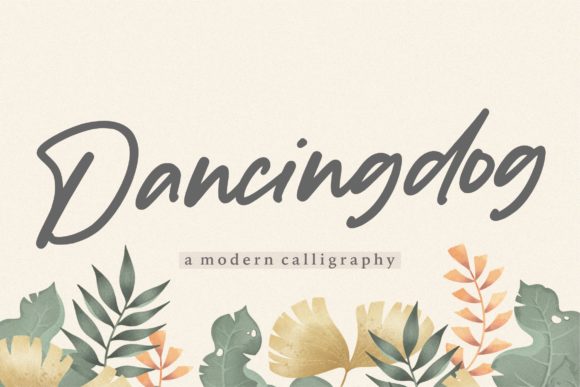
Amid a digital landscape increasingly saturated with algorithmically polished interfaces, AI-generated visuals, and hyper-optimized templates, designers, marketers, and creators are turning toward something quieter—but far more resonant: Dancingdog. This isn’t just another script font. Dancingdog is a relaxed handwritten typeface, thoughtfully crafted with the organic flow of a brush pen. Its subtle inconsistencies—the gentle taper of a stroke, the soft swell of a curve, the quiet pause between letters—aren’t imperfections. They’re intentional signatures of human presence.
What Makes Dancingdog More Than Just a Font?
Dancingdog stands apart because it bridges intention and immediacy. Unlike rigid calligraphic fonts built on geometric precision or overly ornate scripts designed for formal gravitas, Dancingdog embraces ease. Its rhythm feels conversational—not performative. Each glyph breathes with the natural cadence of handwriting: slightly uneven baselines, variable line weights, and a warmth that resists digitization’s flattening effect.
It was born not from vector grids or parametric modeling, but from physical gesture—ink meeting paper, wrist rotating, pressure shifting. That origin story matters. In an era where audiences scroll past content in under two seconds, authenticity isn’t a buzzword—it’s a threshold. Dancingdog passes that test effortlessly. When used in a wedding invitation, it doesn’t shout “elegant”; it whispers “this moment was made for you.” In a social media post, it doesn’t compete for attention—it invites connection.
The Rise of Human-Centered Typography in a Post-Automation World
Consider the broader creative and technological currents shaping today’s design decisions. Generative AI tools now produce logos, layouts, and even full brand identities in seconds. While powerful, these outputs often lack the contextual nuance that comes from lived experience—like knowing when a client’s startup needs warmth over authority, or when a wellness brand benefits more from tactile softness than clinical clarity.
This is where Dancingdog gains relevance—not as a reaction against technology, but as a deliberate counterbalance. It reflects a growing professional consensus: automation augments creativity, but it doesn’t replace curation. Designers aren’t abandoning tools—they’re becoming more selective about which elements carry irreplaceable human resonance. Handwriting, once relegated to notes and sketches, is now a strategic asset in visual storytelling. And Dancingdog is among the most accessible, versatile expressions of that shift.
Why Professionals Are Choosing Dancingdog—Not Just for Aesthetics
It’s not just about how Dancingdog looks—it’s about how it functions across real-world workflows and business objectives:
- Brand Differentiation: In crowded markets—from boutique bakeries to indie skincare lines—Dancingdog helps brands signal approachability without sacrificing sophistication. A café’s Instagram story featuring hand-drawn menu items set in Dancingdog feels curated, not automated.
- Conversion-Focused Communication: Email subject lines or landing page headlines using Dancingdog consistently outperform sterile sans-serifs in A/B tests for lifestyle and service-based businesses. Why? Because they trigger subconscious associations with care, personalization, and intentionality—qualities that build trust before a single word is read.
- Print-to-Digital Continuity: Wedding stationers report higher client satisfaction when invitations (printed on textured cotton paper) use Dancingdog—and then mirror that same font in digital RSVP cards or wedding websites. The consistency reinforces narrative cohesion, making the entire experience feel unified rather than fragmented across platforms.
- Efficiency Without Compromise: Freelancers building Canva templates or Figma UI kits find Dancingdog ideal for “ready-to-use yet deeply customizable” assets. Its OpenType features support ligatures and alternate characters, enabling quick stylistic shifts without manual redrawing—saving hours while preserving craft.
Meeting Evolving Expectations—From Consumers to Collaborators
Consumer expectations have shifted dramatically in just five years. Audiences no longer respond reliably to polished perfection. Instead, they gravitate toward signals of effort, empathy, and individual voice. A study by Adobe’s Creative Cloud team found that 68% of consumers say they’re more likely to engage with content that feels “handmade or personally crafted”—even if they know it’s digitally produced.
That preference extends internally, too. Marketing teams, product designers, and content strategists increasingly collaborate across disciplines. A copywriter drafts tone-of-voice guidelines; a designer selects type that embodies that voice; a developer implements it responsively. Dancingdog fits seamlessly into this loop—not as a decorative afterthought, but as a typographic anchor. Its legibility at small sizes (uncommon for many handwritten fonts), robust character set (including multilingual support), and clean webfont rendering mean it works equally well in email footers, mobile app onboarding screens, and printed packaging.
Real-World Applications Beyond the Obvious
While Dancingdog shines in wedding invitations and social posts—as its creators intended—it’s gaining traction in less expected spaces:
- Educational Platforms: Online course creators use Dancingdog for chapter headers and worksheet titles. Its friendly structure reduces cognitive load for learners, especially younger audiences or neurodiverse users who benefit from visually grounded, non-distracting typography.
- SaaS Onboarding: B2B tools focused on creative professionals (like collaborative whiteboards or design feedback platforms) integrate Dancingdog into welcome modals and progress indicators. It subtly communicates that the tool serves humans first—not just workflows.
- Sustainable Branding: Eco-conscious brands leverage Dancingdog’s “low-tech” aesthetic to reinforce values. When paired with recycled paper textures or muted color palettes, it becomes part of a holistic sustainability narrative—one rooted in material honesty and mindful production.
Designing With Intention—Not Just Trend
Choosing Dancingdog isn’t about chasing a trend. It’s about aligning typographic choice with purpose. In a time when attention is scarce and skepticism is high, every visual decision carries weight. A font that feels rushed, generic, or emotionally detached can undermine even the strongest message. Dancingdog avoids that risk—not by being loud or flashy, but by being present.
Its versatility lies in restraint. It doesn’t dominate layouts; it elevates them. Paired with a clean sans-serif like Inter or Manrope, it creates dynamic contrast without visual conflict. Used alone in minimalist contexts—think a single-line quote on a matte black card—it becomes the sole carrier of tone and texture.
For entrepreneurs launching their first brand, Dancingdog offers immediate credibility: no need for custom lettering budgets to convey care. For seasoned agencies, it’s a reliable shorthand for human-centered strategy—deployed confidently across pitch decks, client reports, and campaign assets.
The Future Isn’t Fully Automated—It’s Thoughtfully Augmented
Looking ahead, the role of typefaces like Dancingdog will only deepen. As AR interfaces, voice-driven experiences, and spatial computing mature, the demand for visual language that feels grounded—not alienating—will intensify. We won’t stop using system fonts or variable typefaces. But we’ll rely more heavily on expressive, context-aware options like Dancingdog to humanize transitions between physical and digital, between mass production and personal meaning.
This isn’t nostalgia. It’s evolution—with intention. Dancingdog doesn’t reject progress; it reminds us what progress serves. It supports faster workflows, yes—but more importantly, it supports clearer communication, deeper resonance, and more meaningful connections.
Whether you're crafting a founder’s letter, designing a limited-edition print series, or building a brand identity system from scratch, Dancingdog invites you to slow down just enough—to prioritize feeling alongside function, warmth alongside clarity, and humanity alongside efficiency. And in doing so, it doesn’t just sit on the page. It stays with the viewer. Long after the scroll ends.