Modya Tea: Where Handwritten Elegance Meets Modern Design Workflow
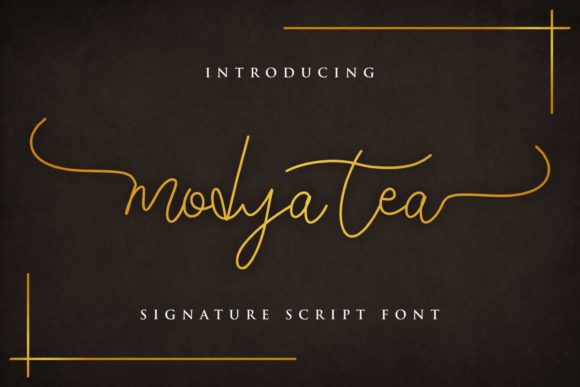
There’s a quiet shift happening across digital design—one that values authenticity without sacrificing polish, personality without compromising professionalism. At the heart of this movement is a growing preference for typefaces that feel human-made yet perform flawlessly in digital environments. Enter Modya Tea: an elegant, flowing handwritten font that bridges centuries-old calligraphic tradition with today’s creative expectations.
Unlike many script fonts that lean heavily into nostalgia or overly ornate flourishes, Modya Tea strikes a rare balance. Its lines are smooth and intentional—not rigid, not chaotic—but guided by rhythm and breath. The varying baseline adds subtle motion, making text feel alive on screen or in print. Each glyph carries weight and grace; alternates and swashes aren’t afterthoughts—they’re thoughtfully integrated tools for expression. And because it’s PUA encoded, accessing those expressive details doesn’t require complex OpenType features or specialized software. Whether you're using Canva, Adobe Illustrator, Figma, or even modern web editors, the full character set remains intuitive and reliable.
Why Handwritten Fonts Are Gaining Real Traction—Not Just Hype
This isn’t about chasing trends for trend’s sake. It’s about responding to how people now experience communication. Consumers scroll faster, skim deeper, and form split-second judgments—yet they also crave warmth. A brand voice that feels distant or templated struggles to land. Meanwhile, creators—from indie educators launching online courses to small-batch product labels—are expected to deliver high-fidelity visuals without studio-level resources.
Handwritten fonts like Modya Tea meet that need precisely. They introduce tactile nuance in a pixel-perfect world. Think of a wellness blog’s newsletter headline: “Your Morning Ritual Starts Here.” Rendered in a clean sans-serif, it reads as functional. In Modya Tea, it gains soft authority—inviting, grounded, unhurried. That difference matters when attention is scarce and trust is earned through tone as much as content.
What’s changed isn’t just aesthetic preference—it’s workflow reality. Designers no longer need to hand-letter every word or wrestle with finicky font substitution. With PUA encoding, Modya Tea delivers its full expressive range out of the box. No plugins. No workarounds. Just select, type, and refine. That reliability makes it viable for rapid iteration—whether you’re mocking up a social post at 7 a.m. or finalizing packaging for a local café’s seasonal blend.
From Calligraphy Roots to Contemporary Flexibility
Calligraphy has always been about gesture—pressure, direction, pause. Historically, those qualities were tied to physical tools: nibs, ink, paper grain. Digital fonts often flatten that dynamism, reducing script to static shapes. Modya Tea avoids that trap. Its varying baseline mimics natural hand movement—the slight rise before a flourish, the gentle dip at a word’s end. Its curves flow without stiffness; its terminals taper with intention. These aren’t decorative quirks—they’re functional echoes of how skilled handwriting behaves.
Yet it never feels dated. There’s no excessive ornamentation, no forced antiquity. Instead, Modya Tea channels the clarity of modern editorial typography while preserving soul. It works equally well on a minimalist ceramic mug label or a vibrant Instagram story. That versatility reflects a broader evolution in design thinking: we no longer choose between “beautiful” and “usable.” We expect both—and Modya Tea delivers without compromise.
Practical Use Cases Across Roles and Real Projects
How does this translate beyond theory? Consider these grounded examples:
- Freelance designers use Modya Tea for client mood boards where tone must be communicated before a single wireframe is drawn—its presence signals care, craftsmanship, and audience awareness.
- Educators and course creators apply it to worksheet headers or certificate designs, adding approachability without undermining credibility. A math tutor’s printable “Problem-Solving Guide” feels more supportive in Modya Tea than in a generic script.
- Small business owners integrate it into limited-edition product tags or thank-you cards—small touches that reinforce brand voice without requiring custom illustration.
- Bloggers and content marketers deploy it selectively: a pull quote in a long-form article, a section divider in a lead magnet PDF, or the title treatment on an email banner. Used sparingly, it elevates—not distracts.
The key isn’t using Modya Tea everywhere. It’s knowing when a moment calls for quiet confidence rather than neutral efficiency. That discernment separates thoughtful application from visual noise.
PUA Encoding: A Quiet Advantage for Everyday Creativity
PUA (Private Use Area) encoding is rarely glamorous—but it’s transformative for real-world use. Many expressive fonts rely on OpenType features like stylistic sets or contextual alternates. Those are powerful, but they demand software support and user familiarity. Not everyone knows how to activate ligatures in Google Docs—or even that they exist.
Modya Tea sidesteps that friction. Swashes, alternate characters, and extended glyphs live in the PUA range, meaning they appear as standard keyboard-accessible characters. Type “a,” and you get the base glyph. Type “a” again in a different context—or use a designated key— and you access a graceful alternate. No menus. No toggles. Just direct, predictable control.
This makes Modya Tea unusually accessible for non-designers: teachers building classroom slides, solopreneurs updating their Shopify banners, writers designing book interiors. It lowers the barrier to typographic sophistication—not by simplifying the font, but by honoring how people actually work.
Choosing Typography That Serves Your Intent—Not Just Your Aesthetic
Great typography isn’t about finding the “most beautiful” font. It’s about matching form to function, voice to audience, and tool to task. Modya Tea excels where warmth, elegance, and legibility intersect—especially in contexts where readers seek connection, not just information.
That said, it’s not universal. It won’t replace your body text font in a 50-page report. It’s not optimized for dense UI labels or tiny mobile buttons. Its strength lies in moments of emphasis, invitation, and identity—where a human touch changes how something is received.
If you’ve ever hesitated to use a script font because it felt too fragile, too fussy, or too hard to manage—Modya Tea may be the recalibration you need. It’s confident without shouting, distinctive without straining, and deeply usable without sacrificing artistry.
Design evolves not by discarding tradition, but by reimagining it for new constraints and opportunities. Modya Tea does exactly that: honoring the discipline of calligraphy while speaking fluently to today’s creative workflows, communication rhythms, and audience expectations. It doesn’t ask you to slow down—it invites you to express more, with less effort, and greater resonance.